






Latest Observation
2025.12.03 Wed
[Quick Report] Analysis results from satellite precipitation data on the record-breaking heavy rainfall occurring in Southeast Asia in late November 2025
Toward late November 2025, Southeast Asia experienced record-breaking heavy rainfall. The Report indicates that ‘Once in 300 years’ rain hits southern Thailand (see note 1), and floods and landslides have occurred in many areas. JAXA monitors rainfall conditions from space through the Global Satellite Mapping of Precipitation (GSMaP). This time, we analyzed rainfall conditions in Southeast Asia.
Figure 1 shows the temporal variation of precipitation observed by GSMaP from 00:00 UTC on November 19, 2025, to 23:59 UTC on November 28, 2025. We can see that heavy rainfall has been occurring in various Southeast Asian countries over an extended period.
Figure 2 shows the daily mean precipitation on days of heavy rainfall. More than 200 mm of rain was recorded in southern Thailand on November 24 and in northern Sumatra, Indonesia, on November 26. Compared to GSMaP’s 25-year average, the southern part of Thailand and northern Sumatra experienced roughly twenty times or more their typical daily rainfall in a single day.

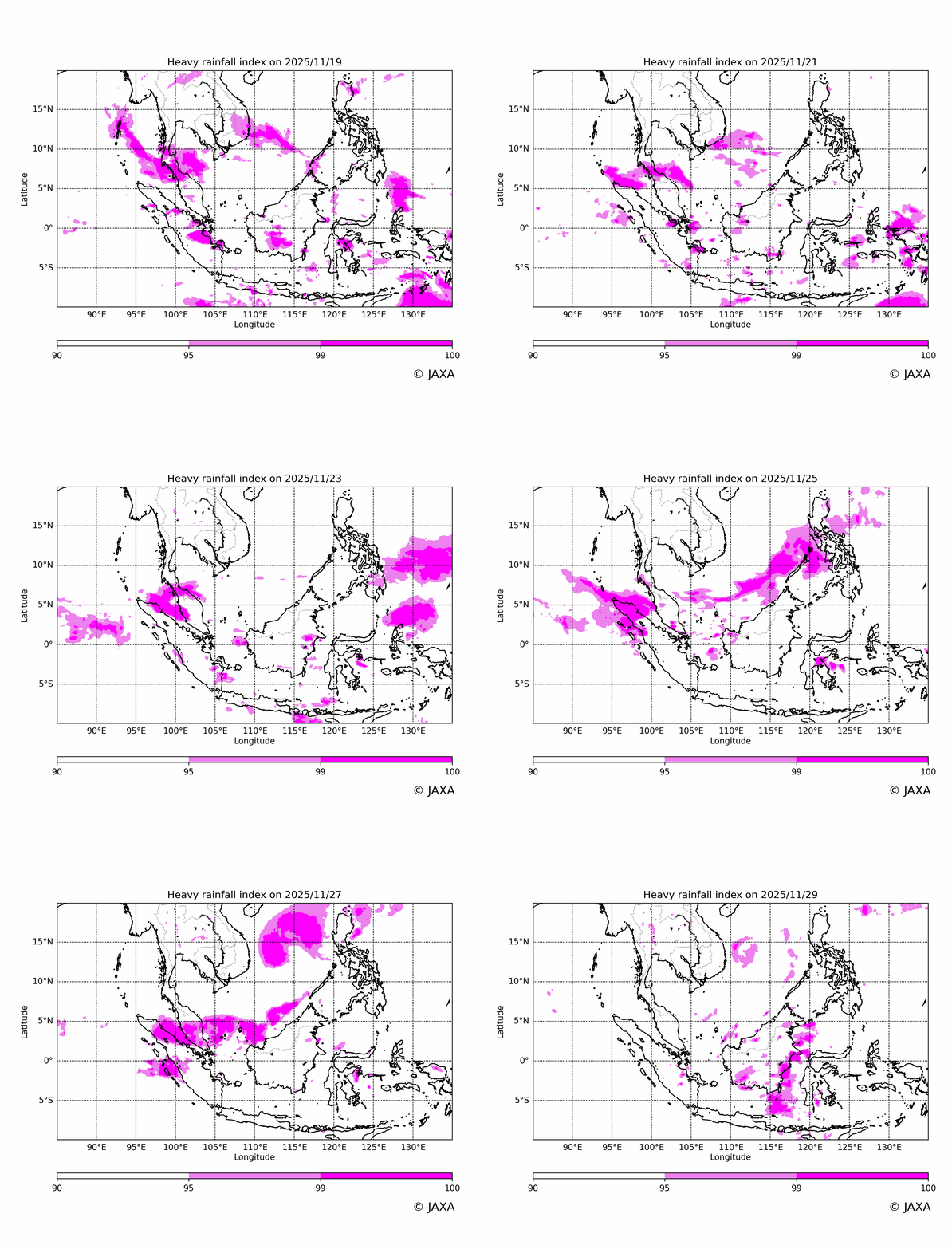
Figure 3 shows the daily variations of the extreme rainfall index from November 19 to November 29, 2025. The extreme rainfall index shows areas where precipitation was equal to or greater than the top several percent of rainfall intensity compared to the average rainfall over the same 24-hour in the previous 25 years. Deep pink areas representing rainfall intensity in the top 1% were observed across southern Thailand, Malaysia, and northern Sumatra in Indonesia. We can see that these areas experienced several days of continuous rainfall. Extremely heavy rainfall, which is an unusually rare occurrence compared to past statistics, is believed to have triggered flooding and landslides in these areas.
In this way, GSMaP can monitor heavy rainfall worldwide, including over the oceans, and has accumulated precipitation data spanning 25 years. There are registered users who use the data spread across 162 countries worldwide. About 80% of GSMaP users are from Asian regions such as Indonesia and Thailand and the use of GSMaP is expanding across various fields, including precipitation monitoring, flood forecasting, drought monitoring, and agriculture.
Related Websites
JAXA Global Rainfall Watch
JAXA Climate Rainfall Watch
JAXA GPM website
Reference
Note 1. BBC, ‘Once in 300 years’ rain hits Thai city as floods ravage South East Asia
https://www.bbc.com/news/articles/ckg97wx144jo
Search by Year
Search by Categories



Tags
-
#Earthquake
-
#Land
-
#Satellite Data
-
#Aerosol
-
#Public Health
-
#GCOM-C
-
#Sea
-
#Atmosphere
-
#Ice
-
#Today's Earth
-
#Flood
-
#Water Cycle
-
#AW3D
-
#G-Portal
-
#EarthCARE
-
#Volcano
-
#Agriculture
-
#Himawari
-
#GHG
-
#GPM
-
#GOSAT
-
#Simulation
-
#GCOM-W
-
#Drought
-
#Fire
-
#Forest
-
#Cooperation
-
#Precipitation
-
#Typhoon
-
#DPR
-
#NEXRA
-
#ALOS
-
#GSMaP
-
#Climate Change
-
#Carbon Cycle
-
#API
-
#Humanities Sociology
-
#AMSR
-
#Land Use Land Cover
-
#Environmental issues
-
#Quick Report
-
#GOSAT-GW
Related Resources


Related Tags
Latest Observation Related Articles
-
 Latest Observation 2026.06.05 Fri [Quick Report] Typhoon No. 6, “JANGMI”, brought heavy rain to Japan. – Results of satellite data analysis –
 -
 Latest Observation 2026.04.16 Thu [Quick Report] EarthCARE Captured the Eye of Typhoon Sinlaku
 -
 Latest Observation 2025.10.01 Wed [Quick Report] Hurricane Humberto “Eye” captured by EarthCARE satellite (Hakuryu)
 -
 Latest Observation 2025.02.28 Fri The world’s largest iceberg, A23a, may have run aground on the continental shelf of South Georgia:
The trajectory of iceberg A23a observed by “GCOM-W”, “ALOS-2” and “ALOS-4”
Stay Connected
